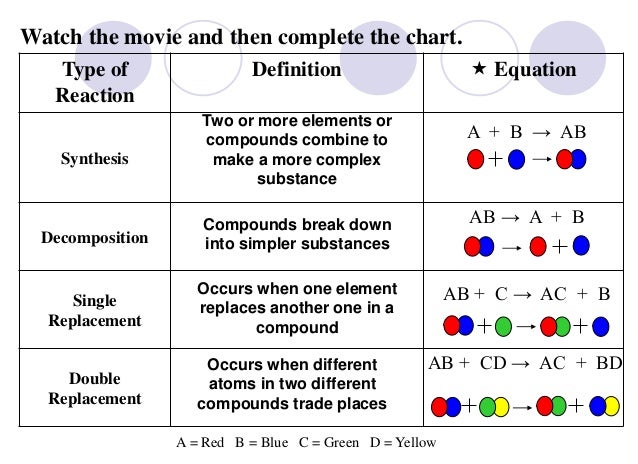
 We started by talking about the simple definition of the terms, what the probably products and reactants are and went over a basic formula for the reaction types the students need to be familiar with.
Reaction Types include:
- synthesis
- decomposition
- singe replacement
- double replacement
- combustion
- endothermic
- exothermic
- oxidation-reduction
- neutralization
- nuclear

Can you guess what type this is?












 Posts
Posts


