Saturday, August 26, 2017

Dudes! (Chemistry Scientists)

There are several "dudes," famous chemistry folks that students need to be familiar with. These dudes (Democritus, Dalton, JJ Thompson, Millikan, Rutherford, Bohr, Heisenberg, De Broglie, and Planck) all did experiments and came up with different and improved atom models. The current model is the elctron cloud or quantum mechanical model which was formulated by Heisenberg and De Broglie.

Heisenberg and De Broglie came up with the current electron cloud model, but we draw Bohr's planetary model the most often because it easier to count the electrons. There's a TedEd video about the progression - HERE.

Electrons are tricky because they move constantly and at high speeds. Heisenberg's Uncertainty Principle states that you cannot know both the speed and location of an electron - you can only know one - because measuring either one, changes the other. DeBroglie's wave theory helps explain why electrons sometimes act like particles and sometimes are compared to waves.

For more information about the evolution of the atomic model, check out this link. And here is a video!


Here are some Dude Quizlet Flashcards to help you out.

Friday, August 25, 2017

Atoms and the PT

Atoms, or elements, are the smallest unit of matter. They retain their identity in chemical reactions and are combined to form compounds and everything in the universe.

Atoms have some basic parts. Protons and Neutrons are found in the nucleus and make up the atomic mass. To find the number of neutrons, you subtract the atomic number (number of protons) from the atomic mass number (protons plus neutrons).

Electrons are so tiny that they do not influence the atomic mass. They are found orbiting the nucleus in shells or orbitals. Atoms are neutral so the number of protons equals the number of electrons.

How small is an atom? Watch this entertaining TedEd video!

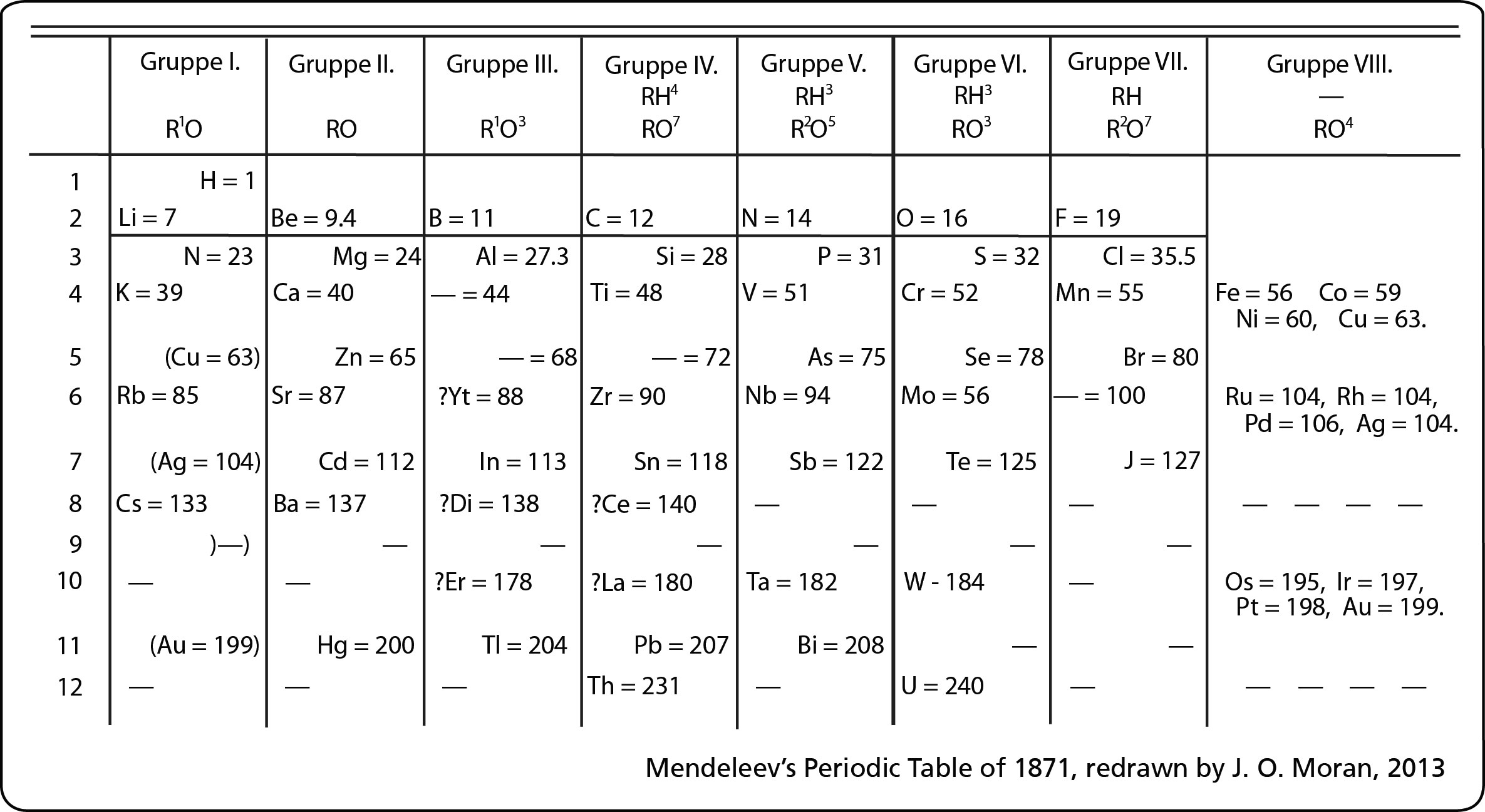
Mendeleev designed the periodic table by looking at the properties of elements on cards and arranging them different ways until he got a system that worked. No one told him how to do it, he just did it until it worked. He even left spaces for elements that were discovered in his lifetime. (More info about Mendeleev) His periodic table was set up according to atomic mass number. The current table, altered slightly by Moseley, is organized by atomic number (number of protons). This is an AMAZING Video about Mendeleev and his PT!

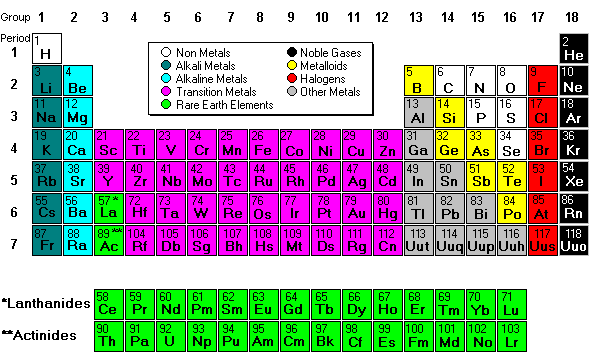
Next we discussed regions of the periodic table, colored them, and labeled them. Periods are horizontal rows (periods go at the end of a sentence) and there are 7 periods. There are 18 groups or families (vertical columns) and a few of them have special names. This a pretty excellent diagram. This website gives a lot of helpful information.


Tuesday, August 22, 2017

Percent Composition

Percent composition is just like determining your grade - the amount you got divided by the the whole amount. 

With compounds, you find the mass of a particular element and divide it by the mass of the whole compound. So if you wanted to know the percent composition of oxygen in water, you would take the mass of oxygen and divide it by the mass of water. 


We practiced some basics and the students measured the amount of sugar found in DubbleBubble bubble gum. 


Students will each have a piece of gum and observe the gum by weighing it, drawing it, and smelling it. The students chew the gum for ten minutes. While they are waiting we will watch How Its Made on bubblegum.

After ten minutes, students will do more observations and re-weigh the gum. The gum weighed less... why? Because the sugar dissolved and was lost. Using this weight difference, students determined the percent composition of sugar in the gum they chewed. They also can convert the grams to moles and determine how many moles of sugar were in the gum.


Monday, August 21, 2017

What is a Mole? What does it have to do with chemistry?

Moles are used to count atoms. There are 22,000,000,000,000,000,000 quintillion atoms in a grain of sand and even counting grains of sand is a pain. Because atoms are so tiny, we use the mole to estimate.

There are 6.02 x 10 ^23 molecules in one mole. That's a whole lot. This is our new favorite number because it needs to be memorized. We will practice converting from moles to molecules.


Next we discussed molar mass. Molar mass = 1 mole and it also equals atomic mass from the periodic table. To find the molar mass of carbon dioxide you find the mass of carbon and two oxygens and add them together. Finding molar mass is not difficult unless the molecule has tricky subscripts (which we have been practicing).


The third thing about moles is that "one mole of any gas will occupy 22.4 Liters." 22.4 is another favorite number. We can convert from moles to liters and from liters to moles. 


Just how big is a mole? There's a TedEd talk on that! Watch it here!

Saturday, August 19, 2017

Conversions (Dimensional Analysis)

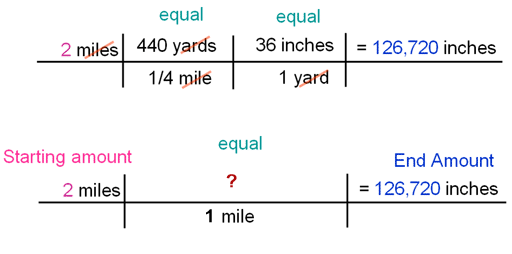
Conversions, or dimensional analysis, are used to change one unit to another. This is really useful when converting to metric units, but is essential to chemistry in terms of mole conversions. Setting up conversions is a skill so we started with learning the format. There are plenty of how to videos out there on the internet for anyone needing a tutorial.

We will practice conversions with some of the crazy things people do to get in the Guinness Book of World Records - like longest ear hair, skinniest waist, tallest man, etc. I think the one the kids thought was the weirdest was the lady who can pop her eyes out 12mm.

Check out more crazy records here!


Thursday, August 17, 2017

Theoretical and Percent Yield

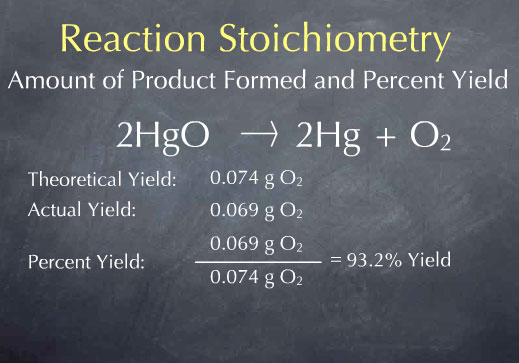
Theoretical yield is how much product you can make with given reactants. To determine theoretical yield, do a normal stoichiometry calculation. 


Actual yield is how much is actually produced when the reaction is performed. 

Percent yield is how well you do. Percent yield calculates how close to the theoretical yield you are. A high percent yield means that your actual yield was close to the theoretical yield, the reaction worked the way it was supposed to it, and it was efficient and accurate. 

Why doesn't theoretical yield equal actual yield very often? ERROR!

Error can include impure substances, uncalibrated equipment, improper procedure... all kinds of things.

Percent error measures the amount of error. Small percent error means things went  well and the actual yield was close to the theoretical yield. 

Percent yield plus percent error should equal 100. 

Significant Digits and Scientific Notation

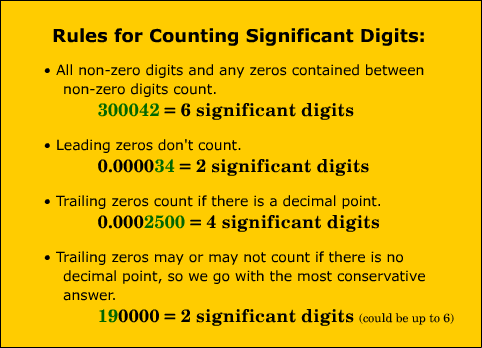
Significant digits are used so that our calculations are not more precise than our measurements. All digits other than zero are significant.
Its the zeros that are the tricky ones. We went over the rules and then did some practice situations. We will continue to practice this and all calculations made for the rest of the year must be rounded to the correct number of significant digits. 

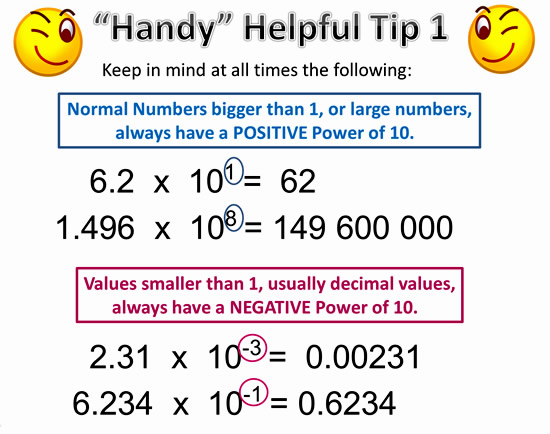
Scientific Notation is used for very large and very small numbers that usually have a lot of zeros to make the numbers for manageable. Most students are familiar with scientific notation and just need a bit of practice. 

Monday, August 14, 2017

Chromatography

Chromatography is the separation of liquids based on particle or molecule size. 

Chromatography is used to separate inks into the colors that make them up. Most inks  are mixtures of colors and the ink will separate into bands of colors based on the size of the different ink molecules.The small particles move faster and will move further up the paper strip (in the photo black); the larger particles do not move as far (yellow). Some black inks are actually made up of blue red, pink, and yellow.

Pairs or groups of students received a strip of filter paper and made a pencil line about 3 cm from the end. They then traced over the pencil line with a marker, dipped the edge of the paper into water and waited. Over time the water will travel through the paper carrying the ink molecules with it. Smaller molecules are easier to carry and travel further.

Chromatography can be used to separate any mixtures with different size particles and actually gel electrophoresis used for DNA analysis works on a similar principle.


Friday, August 11, 2017

LD50

This week's topic is about lethal doses and LD50.

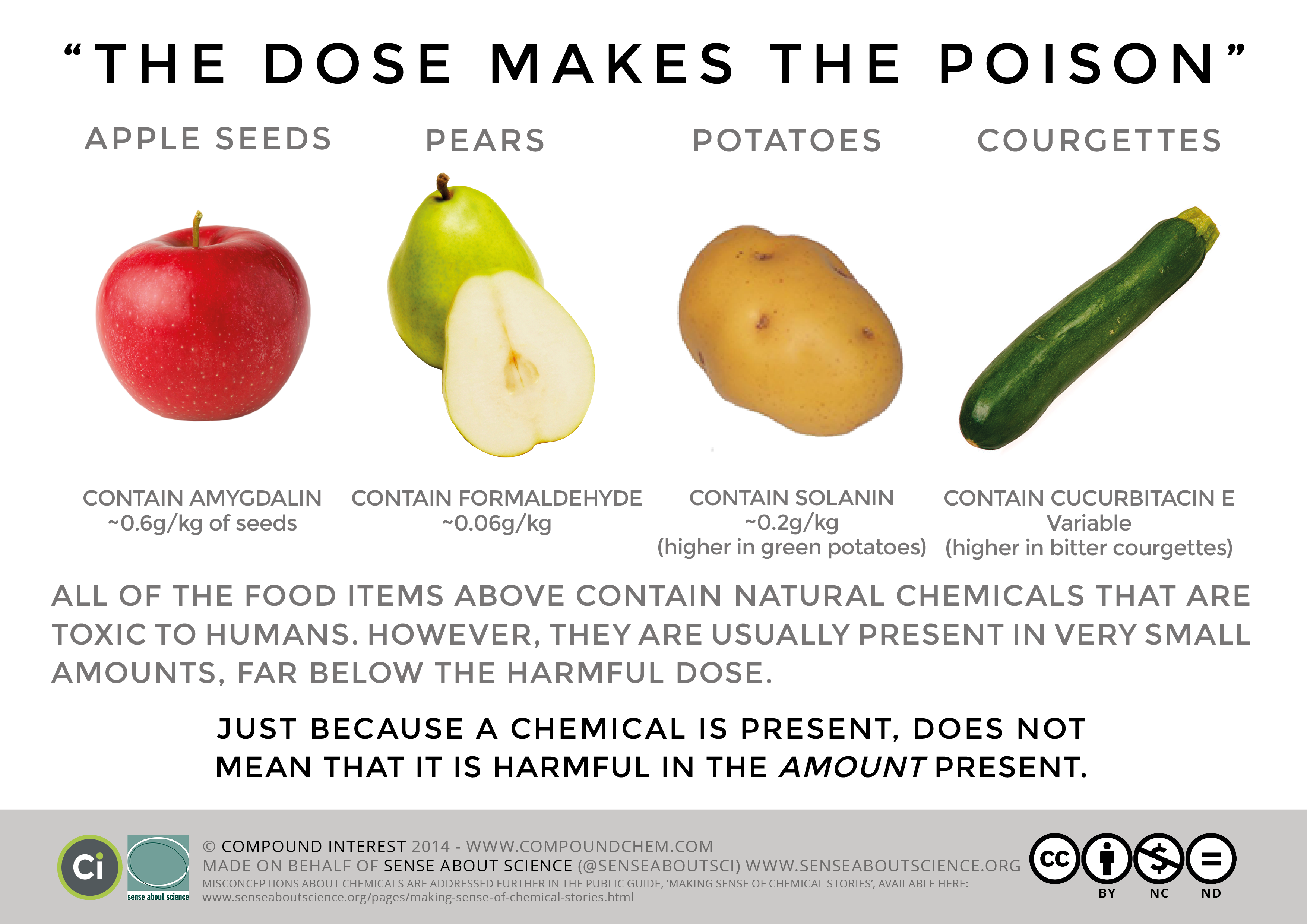
The second portion is about the difference in toxicity of natural vs. manmade chemicals. Most people wrongly assume that if a chemical is natural that is good and that if a chemical is manmade then it is bad. Both can be good and both can be bad!


Compound Interest's original post about Lethal Doses of Common Chemicals can be found here
Compound Interest's original post about Natural vs. ManMade Chemicals can be found here

Thursday, August 10, 2017

Expanding Horizons


Each week you will be asked to visit a few online sources. You may be asked to read an article, watch a video, play a game, take a quiz, listen to a podcast or all of the above. Sometimes you will be given specific questions to answer. At other times you will be asked to write a summary convincing others that they should check out what you found. These assignments will take time so do not wait until the last minute. At all websites, you will be asked to correctly write a citation.

Assignments will be given on Thursday and are due by the end of the school day on the following Thursday (for the first one you get 2 weeks because ROAR has not started). If you are absent, the assignment is due the day you return. 

This week is the first week! Start by taking a personality test at 16 Personalities!

Video 1: How the Elements Got Their Names
You may need to watch this video more than once and pause it.


Another fun video if you are interested!

“From Outer Space to Under Our Skin: A Look At The Universe”
http://ed.ted.com/featured/qwxLv7Xd#watch                    
This video is old, but interesting to think about. Note 100 = 1.

Please let MsJ know as soon as possible if you have problems or questions.